Thursday, February 14, 2013

Retro-Inspired Art - Artist Claudine Hellmuth


In my travels I sometime meet some interesting people and artists. They make beautiful art and products. Sara of Julian Quilts Plus is one of them, a very talented lady who I just met in Julian, California - an historical landmark where I stopped for lunch. She makes quilts in her shop and the one below for Valentine's day is a beauty. Her prices are very reasonable too - she asked me to please design more fabrics with red on beige or ivory backgrounds because she has a hard time to find them for her quilts, so I am posting this request for all textile designers and quilt manufacturers to take this great feedback into account for their next collections :). You can contact Sara directly at sarasquilting@gmail.com if you want one of her beautiful quilts!
Quilting Artist Sara
What makes people get inspired? What do they like? My new guest this week, Claudine Hellmuth, talks about retro-inspired art and licensing.

Artist Claudine Hellmuth
TMFMA: Please introduce yourself - Hi and thanks for having me here for an interview! I'm Claudine Hellmuth and I'm an artist and illustrator. I live in Washington, D.C. with my husband Paul and our dog Maggie and our cats Mabel and Brian.

TMFMA: What's exciting about your creative work? I love the challenge of solving creative and visual problems for my clients. Each new illustration has its own challenges and it's always exciting to think of solutions that fit with my clients needs and incorporate my own artistic style.

© Claudine Hellmuth
TMFMA: Who or what has inspired you in your art? I am always inspired by the retro campy magazine ads from the 1940s and 1950s. I love how over the top they are with women showing how excited they are by their new oven or dishwasher. I have an old Sears catalog from the 1940's that is endlessly inspiring. I also am inspired by folk art, too. The American Visionary Art Museum in Baltimore is my favorite museum!

TMFMA: What's your favorite medium or tool/s you create with? For illustration and licensing work I create with a hybrid of computer and by hand. I prefer to use Photoshop for illustration and licensing because that way I can respond quickly to art director's requests and almost always there are some changes needed so this way I can quickly adjust color, size etc.

© Claudine Hellmuth
TMFMA: How long have you been doing art licensing? I have been licensing my art for use on products since 1998. In the early days I was more in the home decor markets and now I am licensing to the craft and gift markets as my work has evolved to a more whimsical look. Licensing is a tricky business. As soon as I feel I am making good headway in it something falls through. I often feel like with licensing it's two steps forward and one step back. If you are interested in licensing your work, artist Tara Reed has some great information on her web site to get you started. 


© Claudine Hellmuth
One thing that is good to know about licensing is that it isn't as much money as it appears to be! It looks like an artist who has her own stationery line would be raking in the $$ but when you look at the numbers, she's probably only making $0.15 per notepad sold. You've got to sell a lot of notepads to pay the rent!! Still, there are some artists that make 6 figure incomes on licensing so there is the possibility to really make a good income if you hit the right markets.

TMFMA: What brought you to exhibit for the first time and how many shows have you exhibited in? I have only shown at Surtex a couple of times and both times were with an agent or rep and were quite a few years ago. It is enormously expensive to do it on one's own but many artists go for it and have great shows! I began attending CHA in 2003 to promote the release of my first book. Since then I have attended every year but under the umbrella of a manufacturer or publisher. 


© Claudine Hellmuth
I have never had my own booth but my products have been in manufacturer's booths. This year I am having a designer table which is a table display in a special section on the booth floor. We'll see how that goes!!

TMFMA: Do you work with an agent or do you represent yourself? I work with an agent for my illustration work; her name is Jennifer Vaughn and she is fabulous. We have been together for nearly 7 years!

TMFMA: Please give us your analysis of the market based on your own experience and contacts. Illustration continues to be slow. So many companies that used to hire illustrators are now relying on stock. Don't get me wrong, there are plenty of illustrators out there getting work, but the jobs are not as plentiful as they once were.

© Claudine Hellmuth
TMFMA: In your view, what was of major interest to manufacturers this year? What do you think the main trends are for 2012-2013? I think the collage mixed media art style is still very strong. Manufacturers also love quotes and text with artwork and that trend seems to be holding steady as well.

TMFMA: What advice would you give other artists that are considering the illustration or/and art licensing fields and that maybe want to exhibit in a show (like Surtex for example)? I would advise them to walk the show before exhibiting. Follow the artist Tara Reed, she has tons of information on her web site about licensing and also hosts great phone calls with experts that you can listen to.


View more of Claudine's work and follow her at:


Monday, February 11, 2013

The Retailer's Point of View: An Exclusive Interview with Kimberly Jolly

As mentioned in the Atlanta Gift show article we published a few weeks ago, walking the Mart gives one a greater insight into art, products, and how the product development-wholesale-retail-consumer business operates. We are very excited to introduce the first of a series of new editorials about fabulous retailers and their stories. We hope this will complete the circle and help understand the process from beginning to end.

Tell us a little bit about yourself and your company. What do you do? My name is Kimberly Jolly and I own Fat Quarter Shop, an online fabric store and It's Sew Emma, a quilt pattern company.

Kimberly Jolly
What drives you personally in your job? What inspires you? Writing patterns inspires and drives me in my job. Our pattern company, It's Sew Emma, has been an exciting venture and continues to take us on new adventures. Last year we wrote our first book and are gearing up to continue that journey!

Tell us a little about your selection process. While we always tend to purchase fabric collections that appeal to our personal tastes, we also keep an eye out for new trends and listen to what our customers want. This helps us keep our fabric offerings diverse and well-rounded. From batiks to modern to traditional, we have it!

What makes for a great art collection? As a quilter, I look for fabric collections I can really use. That means, beyond having some wonderful focal prints, a collection needs an awesome range of coordinates. When I look at a new collection I can instantly dive in and pinpoint my best focal, binding, sashing and background options.

What are some of your favorite design trends right now? We are always keeping an eye on trends. As of right now, my favorites have to be solids and chevrons. Solids are currently stealing the show in many quilts. We carry a vast range of colors and we love seeing the many different quilts made from solids. Chevrons, too, are everywhere. Chevron prints have popped up in the fabric, home décor and quilting industry. It is hard to over look this bold trend!

What's your largest market category? While we stock a variety of notions, books, sewing and quilting patterns, our largest category is high quality designer fabric for quilting and sewing.

Happy tones
What's on the horizon for your company? Here at Fat Quarter Shop we are developing our Coming Soon page. We are striving to make it easy to browse the collections and have an idea of what may perk the customer's interest. We are also engaging our customers in new ways, like an upcoming free sew-along project that will be hosted on our blog!

Find out more about Fat Quarter Shop and It's Sew Emma here:

chevrons
modern
solids

Thursday, February 7, 2013

Art Licensing in Terms of the Process - Artist Jeannene Langford

As promised, we are going to add a new series of informative articles and interviews with retailers - the first one will be published this coming Monday! We hope that this will be of interest to those who license their work and want to better understand how the whole artist-manufacturer-retailer process works.

And speaking of process, here is our interview of the week which also addresses art licensing in terms of the process, as described to us by artist Jeannene Langford.

The Moon From My Attic: Please introduce yourself - I'm a fine artist, designer and all around creative. I paint both digitally and traditionally on paper and canvas with a range of materials. My look is bold contemporary with a touch of whimsy. I like describing images in simplicity. I am equally smitten by both fine art and design and pursuing both at the same time can bring many challenges as well as benefits. Spending time mixing colors in the studio sometimes translates to using the same color when I am working or can give me a new idea.

I am the type of person who is always wanting to learn something new. Recently I took two very different intensive workshops and I was smitten. The first was a "Painting with Thread" workshop by a local artist Lisa Kokin.

Artist Jeannene Langford
The second was a video training intensive. We learned how to tell a story in video and how to edit and transform it in Adobe Photoshop 6. Amazingly cool and fun.

TMFMA: What's exciting about your creative work? What’s not exciting about the creative process?! Seriously, the exciting parts are new opportunities, discoveries, collaborations and making a difference. By making a difference I mean feeling like I am contributing to the beauty of the world and raising the bar by offering the best I can. There are too many companies I have worked with that fail to put great art on their products because they need to get it to market so they can meet a manufacturer's deadline. For me it's not about perfection but about the integrity of knowing you did your best and really being happy when you see the product at the store with your art on it.

© Jeannene Langford
TMFMA: Who or what has inspired you in your art? On a day to day basis inspiration comes from playing with color, walking the dog, doodling, looking through books on fine artists such as Matisse, Picasso, Miro and recent artists such as Andy Warhol, Helen Frankenthaler, William de Kooning, and Agnes Martin. I am a nut for being outdoors and play to me is hiking, cycling, kayaking and scuba diving so nature is a big source in inspiration.

Usually I am in NYC once a year for Surtex/ Stationery and I have a long list of stores, galleries, and museums that I find really over the top inspirational. I will be posting this soon on my blog or you can email me at j@jeannenedesign.com if you would like a copy. For me inspiration never comes from anything on the trade show floor.

If I am not in a place to sketch, I like to record things I want to refer to later with my iPhone camera. Sketches and pictures I've taken along with my books are categorized and become a good place for inspiration and reference.

Since I've been trained in product development and as a Creative Director I tend to look for inspiration through the lens of concepts rather than single images. How that plays out is thinking of a collection of images that tell a story or a concept that would be applied to a specific product category or demographic.

© Jeannene Langford
TMFMA: How long have you been doing art licensing? My introduction to licensing came back in the 90's when I was working for Current Inc., (a stationery company based in Colorado) as a Licensing Designer. I worked with several artists and brands developing their art into product. We also had at the time 35 illustrators whose art we licensed out to other companies which involved developing a portfolio, a presentation and selling at the Licensing trade shows and preparing contracts.

From there I moved to California and went out on my own and started licensing my own art for tabletop and stationery. After 7 years, I received an offer I couldn't refuse as an Art Director for a local craft manufacturer and then went on to become a Creative Director for a few places so once again I found myself on the Licensee side of the table working with other artists to develop their art into product and direct creative departments. Slowly my own portfolio and set of clients grew on its own. Right now I am taking some time to step back and do some Blue Sky sessions, looking into different ways of providing art, and some alternative marketing, licensing, and business models.

© Jeannene Langford
TMFMA: Please give us your analysis of the market based on your own experience and contacts. No doubt about it, twenty years ago we were in a more abundant marketplace. The predicted growth for the stationery market here in the US is only about 3% for the next 4 years, however, I truly feel there has never been a better time for designers and artists. Through the accessibility of the internet we have exposure to new markets and manufacturers including ways to show and sell our designs. It seems I am consistently hearing of manufacturers finding artists on Etsy or Pinterest. How great is that?

I am not saying the face to face you get at being at a trade show is not important. It is, but there are many other ways to move forward. Some artists develop their own product first or get exposure through writing a book on the technique they use. It seems the collaboration process with artists and manufacturers is in a more fluid state, manufacturing is less of a commitment with the ease technology has brought to the manufacturing process.

© Jeannene Langford
TMFMA: What advice would you give other artists that are considering the art licensing field? Here are 9 Musts I would like to share:
  1. Be able to live without any income from licensing your art for at least a year. Manufacturers work 6 months to a year out at least. You are handing over the art usually a year before you see royalties from the first three months of sales. Make sure you get the support you need. Try joining a group of professional artists and if there is not one in your area start one!
  2. Focus on no more than 3 or 4 categories (industries) you would like to target with your art.
  3. Develop a look that is you, ideally something that makes you smile in the morning and want to run to your studio to get started. This is the most important step, and the one a lot of graphic artists miss. Make sure there is consistency in your collection offerings.
  4. Make sure that look is reproducible. Investigate the production methods of whatever industry you are targeting with your look.
  5. Create a portfolio that is translatable to the industries you choose. Have as many other professionals (people you respect and like their work or tastes) look at it as possible. It is beneficial to get as many qualified opinions as you can but don't act on them unless you truly feel it is right for you.
  6. Before you consider participating in a trade show investigate it. Walk it, ask questions of the event sponsors and others that have shown there before. If you want to be taken seriously know it's a long term investment. Plan on being there for a few years to build up a following and credibility.
  7. Investigate if working with an agent is right for you. Inquire about them by asking other designers how they like working with them. How many new companies or deals have they brought to the table? Do they offer art direction? Good agents are priceless if you have a ton of work and no desire to try to get it out there on your own. They handle networking, promotions, contract negotiations, collecting kill fees, and follow through with payments.
  8. If you decide to go it on your own know a good licensing attorney (this applies even if you have an agent). You will need to have a contract that serves as a base of what you will and won't accept. You also need to understand all the terms, especially the indemnification section.
  9. Keep looking for that yes even when it seems impossible. If it seems like you can't make a deal happen because the terms being set by the other party are conflicting with another agreement, the pay is too low or something else, step back and ask yourself how you can make it happen. Brainstorm with another artist. Can you make a similar design they would take that would not infringe with the other design? Can you take a flat rate up front instead of the lower fee? This it another way of saying look for that win-win.
TMFMA: Any other useful info that you'd like to share about art and licensing? I like to think of art licensing in terms of the process. Breaking it down helps manage expectations. Know your art is going to look different after the stages of product development. Try to think of your art in these different renditions:
  • First you get the inspiration and create the art. Wow, great you're finished – with that step anyway.
  • Next you create a collection and put it in a portfolio and send it off into the world. (lots more work here)
  • Yay, for you, it is licensed. You write a contract with a manufacturer. The third rendition is now made according to the manufacturers specs, which might include changing color, details, formats, etc…
  • You turn that version over and production happens - voila! a product is born.
  • The product or a prototype is photographed for a catalog, packaging, pop display or an ad creating another version of your art.
  • Your "art" is now on the store shelf. The cash register rings and it is purchased by someone who smiles every time they see it or use it.
  • At the end of three months of sales you get a statement and a check. Great, it's time for that Cosmo!
Does the product look like what you envisioned in the beginning? It should resemble it pretty closely. During the process you are in collaboration with the manufacturer, hopefully a good one with the goal that your art evolves to a product everyone loves and buys.


Find out more about Jeannene Langford here:

Tuesday, February 5, 2013

Follow Your Bliss - Artist Tamara Holland

Personalized and inspirational art, perhaps on demand, seems to be a trend that has been spreading like a wild fire. I saw lots of it at the Atlanta Gift show a few weeks ago and I keep bumping into it as I review other publications and emerging artist's websites. To further illustrate this point artist Tamara Holland will share her story with us.

The Moon from My Attic: Can you tell us a bit about yourself and your art? I'm a post-conviction death penalty defense attorney by training and an artist by luck. I started doing paper-arts projects with girlfriends about 10 years ago and my art (and now art business) morphed from there. I'm also a mom of grown kids and am going to be a grandma this spring.

Artist Tamara Holland
TMFMA: What is exciting about your creative work? The whole thing. All of my visual art to me is a surprise - that I am producing it at all and what it looks like as it changes over time. I never thought of myself as an artist because I cannot draw at all, while many of my family members are amazing at that. So, to me it is exciting to be playing at this and to see what comes forth.

TMFMA: Is there a person or thing that has influenced you in your artistic efforts? What inspires you? Julia Cameron's "The Artist's Way" transformed my creative expression. I worked that book at the same time I was starting to play with paper arts with friends. All my life I thought my creativity channeled itself in writing - when it turned out I've got this visual side, too. I'm not sure that door in my thinking about creativity would have opened without "The Artist's Way."

TMFMA: What project are you currently working on? I'm working on images for what I think of as two different lines of my own because their styles are so different. I'm also writing copy for three lines with my partners at Morning Coffee Productions. And I am starting a novel. I also have a budding sales rep business for other greeting card artists.

© Tamara Holland
TMFMA: Tell us of your experience as an art licensing artist. Again, total luck. For a couple of years I'd been getting my greeting cards printed locally, selling them on my own and with two reps, and fulfilling all the orders each week. Last fall I made a business plan with artist and consultant Lisa Sonora Beam - where we set as a goal that I investigate licensing. I went as part of that to a Saturday meeting of the Bay Area Licensing Artists - where, as luck would have it, I sat around a table with who turned out to become my licensing agent and my business partners in Morning Coffee Productions. Through Montage Licensing a happy chunk of my images are now licensed by wonderful Calypso Cards. In more good luck, Thirstystone has licensed a set of images for production on their coasters, plates and trivets.

TMFMA: Any important tips and tricks you can share or anything else you'd like to share? Half of my "advice" (because I think things work differently for everyone, and you should trust what works for you) is from Joseph Campbell: "Follow your bliss." When you spend time doing what you love and believe in the energy flow of the world seems to respond better and you are happier while you are doing it, too.

© Tamara Holland
The other half of my advice is to work your butt off - in what you produce, in getting it out there in the world, in meeting and helping other people, in figuring out what works and what doesn't, and what you want to try next.

TMFMA: What are your future aspirations and goals? To keep manifesting the stuff that for whatever reason chooses me to make it. Right now, those are the lines I'm working on. This years' novel. Getting two screenplays I've already written out into the world. And seeing what else wants to come on in. And being a good grandma.

Find out more about Tamara at: www.beanupthenoseart.com


© Tamara Holland

© Tamara Holland


Thursday, January 31, 2013

An Art Licensing True Story - A Late Bloomer’s Path by Artist Natalie Timmons


I have been experimenting with some new and fun techniques, and ended up with a couple of new collections that might be perfect for upcoming potential clients. Sometime good things come from unplanned actions and become useful at a later time, when the right time comes.

This is just like the experience of today's guest artist Natalie Timmons, who says she is a late bloomer as far as art and art licensing go. She also adds, "The first half of my life I enjoyed a very successful career in marketing communications and graphic design while raising an amazing son with my husband. Ten months before I turned 50, I left a full-time job to return to consulting part-time so I could seriously pursue my art and art licensing. Something inside me kept telling me 'now was the time.' My friends thought I was nuts to leave a good job in this economy. But I've never pursued things in the normal way and tend to follow my heart. Not willy-nilly, mind you. I saved my pennies, so I'd have a financial cushion."

As it turned out, she was lucky enough to leave the job she had with a contract already in hand. "I've had the best of both worlds this past year working part-time as a project manager for a global website project and part-time on my art" - she adds.

© Natalie Timmons
I asked Natalie how she discovered art licensing. She replied, "I've always been a huge fan of Mary Engelbreit, Marjolein Bastin, Kathy Davis, Amy Brown, Debbie Mumm, and Susan Winget. In fact, our first floor bathroom is a shrine to Mary Engelbreit. It has a pretty black and white checked border that I sponge painted by hand, five of my favorite ME calendar prints framed in black, a display of ME collectibles and a floor canvas that I designed and hand painted with Mary's trademark cherries and a black and white border."

Natalie thinks the catalyst was an article she read about Kathy Davis in the September 2009 issue of More Magazine. "After reading Kathy’s inspirational story, I started gobbling up everything in sight about art licensing. I read every website, blog and book I could get my hands on. I also started dabbling in sketching and painting my own designs."

© Natalie Timmons
In early 2010, she had a one-hour consultant with Carol Eldrige to see if her art was appropriate for art licensing. "I'm almost embarrassed to say I brought about 20 frogs and a few other paintings to the meeting. Carol thoughtfully reviewed them all and basically said, 'You're going to need a lot more than frogs'. She was a sweetheart and gave me solid next steps to pursue as far as expanding my portfolio."

In September 2010, Natalie left her job and diligently began sketching and painting new designs for her portfolio. After five months as a part-time artist she created about 5 small collections, she says. "At that point, I wasn't sure if I was heading the right direction so I signed up with Tara Reed for 6 coaching sessions. I can't say enough about Tara Reed Coaching. Her coaching approach is detail oriented and fantastic. I really feel I cut out a lot of trial and error by coaching with Tara. Using my expertise in marketing and what I learned from Tara and Joan Beiriger’s Blog, I spiffed up my approach so much that one agent said my sell sheet presentation was one of the best she'd ever seen. This inspired me to create a free eGuide on How to Create Killer Sell Sheets for Artists."

© Natalie Timmons
Natalie also walked Surtex for the first time in May 2012. Surtex was a fantastic experience for her - finally in one place was all her favorite art and many of her favorite artists, she added. "I was in heaven. I also attended all ten workshops which I found extremely informative. If you missed the workshops you can read the Surtex 2012 Conference Re-cap on my Creative Leaps Blog."

It's now been 14 months since she began her art licensing pursuit. "I've finished ten collections with a total of 108 icons, 205 mockups, 165 patterns, 29 borders and 4 designs or 511 art elements. Half of the collections are rather large, so my goal from now until Surtex is to create smaller collections to show a larger variety of themes. This will be my first time exhibiting at Surtex. I am equal parts exited and scared to death!!"

Natalie tells us more about her art licensing adventure: "I am unapologetically perky and so is my art. My tagline is 'Contagiously happy nature and animal art.' My inspiration comes from my gardens, walks in the countryside and the sweet spirit of animals. The work of other artists can also spark a creative fire."

She hand paints her art elements or designs in watercolor, pen and ink, scans the paintings, and then manipulates them in Photoshop to create designs, patterns, borders and mockups. Her last collection, called Rooster Country, was her first attempt at digital painting. "It was a blast! I sketched the 4 roosters, drew their interior patterns and outlined them with a black Micron pen. Then, I scanned and digitally painted them in Photoshop. I really enjoyed the flexibility of being able to change colors without having to redo the whole painting. It was liberating!"

© Natalie Timmons
"You (Alex), Cherish Flieder and few others have mentioned the value you've gotten from art licensing groups. I couldn't find a group like that on the East Coast, so I started one. Although I am very blessed to have incredibly supportive family members and friends, none of them are artists. And, I felt surrounding myself with like-minded people was very important. The first meeting of the Art Licensing Group of New Hampshire was in June and we now have 12 members."

Natalie runs the group similar to a Mastermind group, she says. "I'm a bit of stickler about the members setting and achieving small doable goals. I really believe that taking small progressive steps towards a dream is better than setting off in some vague direction. It's just too easy for life to get in the way of such a wishy-washy undertaking. Each month the members set a goal. I route the list of goals to the members and we hold that intention for each other until the next meeting."

© Natalie Timmons
Her group addresses the concrete aspects of art licensing such as how many pieces should one have in a collection, do they need an agent, copyright law and contracts, marketing, etc. She also adds, "But for some of us, it's not knowledge or lack of talent that holds us back from our dreams; it's our inner gremlins such as fear, low self-esteem or the negative stories we tell ourselves. We tackle those issues too by sharing techniques for overcoming resistance, designing our ideal day, and giving each other support and encouragement … or a gentle kick in the but.

"It has been amazing and wonderful to witness all the information sharing and encouragement that goes on in the group. In just six months one of the members found and signed with an agent. While other members have created new websites or gotten really focused and productive in their creative output."

Natalie also says she secretly wanted to be an artist. "However, when I was young I never thought I was creative. I had friends that could draw amazing things. But drawing never came easy to me so I tried other things like crotchet, tin punching, cross-stitch, quilting, poetry and creative writing.

© Natalie Timmons
They say, 'what you want, wants you' and I think my secret yearning to be an artist attracted me to a creative industry like advertising and marketing and kept me dabbling my way through a variety of creative hobbies until I was ready to own up to being an artist."

When she was 22, she took a decorative painting class at the Creative Cricket in Stratham, NH. The classes were essentially paint by numbers but she was hooked on paint. She painted signs, stools, and holiday decorations. She continues, "Although I've moved well beyond painting other people's designs, I learned a lot about paint and brush control from those early years. I used to practice my decorative strokes while watching TV with my young son at night.
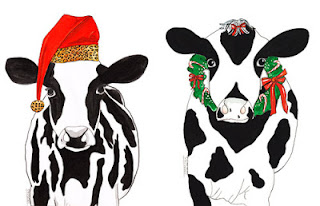
© Natalie Timmons
I took my first watercolor class about ten years later. When I walked into the first class, everyone had an easel and the instructor pointed to a detailed landscape and said draw this. I thought, 'Oh boy, this is a real art class!' From then on, watercolor has been my medium of choice. In fact, I wouldn't touch my acrylics for two years because the whole approach to watercolor was so different. In acrylics, I painted darks to lights. With watercolor, I had to reserve the whites and lights."

Slowly but surely Natalie began painting her own compositions, mostly landscapes, home portraits, and floor mats. In October 2009, she sketched and painted her first frog. "Why is a little frog so exciting? Well, I was trying to channel the light, sweet style of Rachelle Ann Miller whose work I adore. But, my little frog painting came out nothing like her work. My colors are higher key and much more saturated. It was also hand-painted rather than digitally rendered."

© Natalie Timmons
"No matter", she says, "the important thing is that I became obsessed with painting happy little frogs. And, it was in sketching and painting frogs that I gained a lot more confidence in creating my own designs. More importantly I discovered my sweet spot – a way to marry two skills that I love – graphic design and painting. So, in a strange and wonderful way, my cute little frogs led me to the possibilities of illustration and art licensing."

These days, her primary goal is to keep designing and painting a greater variety of images and themes so her style and voice evolve more strongly. "I'm a firm believer that my art, and my heart, will show me the way."

You can learn more about Natalie at: